Choosing a dependable Chinese supplier is not just about comparing prices. It means checking whether fabric, sizing, stitching, and delivery stay consistent across repeat orders. The WTO’s World Trade Statistical Review 2023 reported that China supplied 31.7% of global clothing exports in 2022. That scale offers buyers many options, but it also makes careful screening essential. A large export sector does not guarantee a reliable factory.
For buyers researching how to choose quality women's apparel, start with evidence you can inspect. Request a sample in the intended fabric, then check seam strength, color consistency, measurements, and labels against your specification. Ask who owns the factory, which processes are outsourced, and how defects are recorded. The McKinsey and Business of Fashion State of Fashion 2024 report discusses ongoing sourcing pressures and supply-chain volatility. Its lesson is practical: confirm capacity and lead times rather than relying on a sales promise. Small details matter.
Quality-management expert Joseph M. Juran defined quality as “fitness for use.” That standard fits apparel well: a blouse can look polished on a hanger yet fail after washing or wear. Ask for test records where relevant, approve a pre-production sample, and document tolerances before placing a bulk order. Then speak with a current customer, if possible. A supplier’s brochure is not proof. I would still treat one successful sample as only a starting point; production runs can reveal problems that a showroom never will.
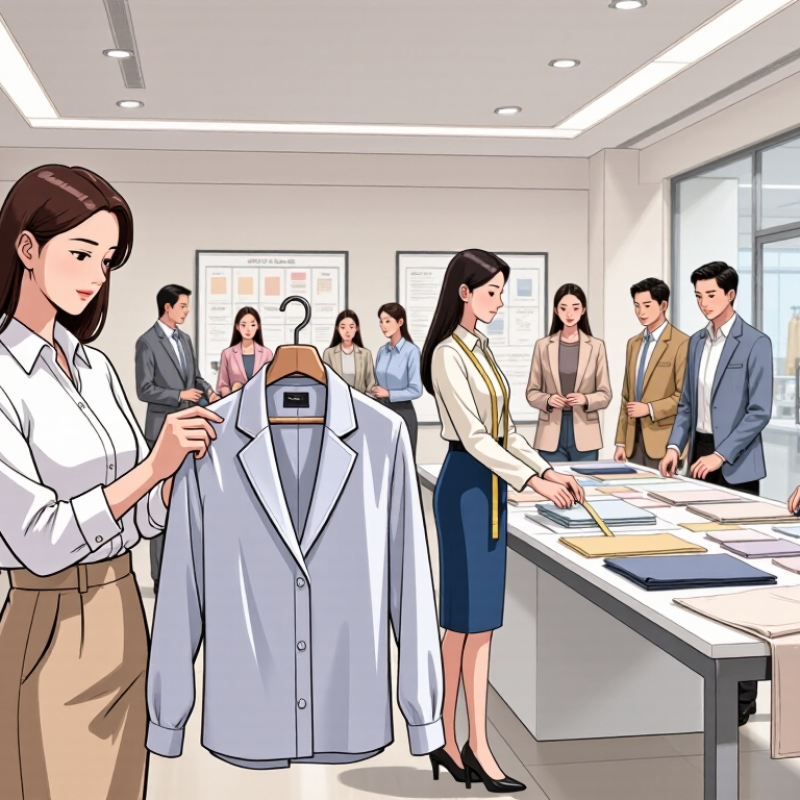
Before contacting suppliers, define the garment, its intended wearer, use, season, and target price range. Turn these choices into measurable details: fiber content, fabric weight, colors, size chart, stitching, trims, labels, and packaging. For a cotton shirt, specify whether the fabric should feel crisp or soft, and note acceptable shrinkage after washing. Include your target order quantity, repeat-order plans, and a realistic delivery window. Small details matter.
Separate must-haves from preferences. A supplier may offer a low price but miss the fit or finish your product requires. Prepare a tech pack with sketches, measurements, construction notes, and clear reference photos. Ask which specifications the factory controls directly and which depend on outside partners. This affects timing and consistency. Allow time for clarification: “premium fabric” means little without a stated composition and weight.
Set supplier criteria before comparing quotes: relevant garment experience, sample procedures, production capacity, inspection steps, communication habits, and willingness to document changes. Request a sample made to your specifications, then check seams, buttons, measurements, and wash behavior against a written checklist. Compare quotes on the same basis, including fabric, trims, packaging, and shipping terms. A spreadsheet helps, but it cannot reveal every issue. Ask direct questions. If answers remain vague, pause and verify rather than assuming you are aligned. This can feel slow.
China’s womenswear suppliers range from garment factories to trading companies and design-led manufacturers. Factories may offer closer control over cutting, sewing, and finishing, but some require higher minimum orders. Trading companies can coordinate several product categories and communicate in English, though their factory access and fees should be clarified. Design-led suppliers may help develop patterns or samples. Capabilities vary widely.
Sourcing channels include business-to-business platforms, apparel trade fairs, referrals, and local sourcing agents. Online listings help build a shortlist, not confirm quality. Ask for a recent sample, a factory address, and a clear breakdown of fabric, trims, and production costs. At a fair, inspect stitching and fabric weight under good light. Small details matter.
A supplier’s polished showroom does not guarantee consistent bulk production. Request a pre-production sample and compare it with the approved specifications, including measurements and color references. Confirm minimum quantities, lead times, and how defects are handled in writing. A third-party factory inspection can add useful evidence when a visit is impractical. Even then, checks have limits. Leave time for revisions; the first sample may miss the mark, and changing suppliers late can be costly.
A dependable womenswear supplier should prove what its factory can make, not just show attractive samples. Check the production floor: matching machines, skilled operators, fabric inspection tables, and enough lines for your order. Textile Exchange’s Materials Market Report 2024 estimates global fiber production reached 124 million tonnes in 2023 and could rise to 160 million by 2030. That expanding material mix makes fabric traceability and clear lot records increasingly important. Ask how a fabric lot is linked to cutting, sewing, and finished-garment checks.
Review the quality system in practice. Request inspection records, defect classifications, measurement tolerances, and examples of corrective actions. Ask to see it. Confirm that the factory checks garments during production, not only before shipment, and that measuring tools are calibrated. A current ISO 9001 certificate can indicate a documented management system, but it does not guarantee every garment meets your specification. Verify the certificate’s issuer, scope, factory address, and validity; then compare the paperwork with actual routines.
Credentials deserve the same scrutiny. Check audit dates, covered sites, and whether findings were closed with evidence. Speak with the production manager about capacity during peak months, staff turnover, and how failed samples are handled. A polished binder can still hide weak follow-through. I would treat missing records as a question to investigate, not automatic proof of poor work; factories vary, and buyers can overlook their own unclear specifications. Get sample approval, tolerances, and inspection criteria in writing before bulk production begins.
A sample should be more than a quick look at color and fit. Compare its measurements with your specification, then check seams, buttons, zippers, and lining. Ask whether the sample uses the same fabric and trims planned for bulk production. If not, its performance may be misleading. Small differences matter.
Test the material in practical ways. Wash a swatch according to the intended care instructions, then check shrinkage, color transfer, and surface changes. Feel the fabric before and after washing. Keep an approved sample, dated and labeled, as a reference for later inspections. It is easy to overlook a loose stitch when reviewing a garment under bright showroom lights. Slow down.
Request clear fiber-content information, care-label details, and relevant test reports. Requirements vary by destination market and product type, so confirm the applicable rules before placing an order. Check that reports identify the tested material or garment, not just a similar item. When needed, use a qualified independent laboratory. Documents can look complete and still leave gaps. Ask the supplier to explain unclear results, and record the response. No checklist catches everything, but written specifications and repeatable checks make surprises less likely.
A useful supplier comparison starts with matching quotations line by line. Check whether each price covers the same fabric weight, trims, stitching, packaging, and sample development. A low unit price can look like a win. It may not be. One quote might exclude labels or charge separately for pattern adjustments. Ask suppliers to confirm minimum order quantities, sample fees, production time, and payment milestones in writing. Keep the details in one comparison sheet, so differences are visible before you commit.
Terms matter beyond the quoted price. Clarify how defects are handled, when bulk production begins, and what happens if materials arrive late. Request a size set or pre-production sample, then compare it with your approved measurements and construction notes. Communication is part of the evaluation, too. Send the same specific questions to each supplier and note how clearly they answer. A prompt reply is helpful, but a careful answer with dates, quantities, and next steps is more useful. If an answer stays vague, ask again. I would not treat one missed detail as proof of poor service; people make mistakes. Still, repeated confusion over a simple measurement deserves attention.
Look for suitable sewing machines, fabric inspection tables, skilled operators, and enough production lines. Ask how fabric lots are tracked. Ask to see it.
Request inspection records, defect categories, measurement tolerances, and corrective-action examples. Check that garments are inspected during production, not only before shipping.
No. Verify its scope, factory address, issuer, and validity. Then compare the paperwork with actual inspection routines.
Compare its measurements with your specification. Check seams, buttons, zippers, and lining. Confirm it uses the same fabric and trims planned for bulk production. Small differences matter.
Wash a fabric swatch as directed. Check shrinkage, color transfer, and surface changes. Keep a dated, labeled approved sample for later comparisons.
Request fiber-content details, care-label information, and relevant test reports. Confirm each report identifies the actual material or garment. Some gaps are easy to miss.
Compare the same fabric weight, trims, stitching, packaging, and sample work. Confirm minimum quantities, fees, timelines, and payment milestones in writing.
Agree in writing on defect handling, late materials, inspection criteria, and production timing. Request a pre-production sample or size set. I might overlook a detail, too, so clear notes help everyone.
Choosing a reliable clothing supplier in China begins with clear product requirements. Define the styles, fabrics, size range, target price, order quantities, and production timeline you need, then use these details to assess potential suppliers. Explore different supplier types and sourcing channels, such as manufacturers and trading companies, while considering which best fits your order size and level of support.
To understand how to choose quality women's apparel suppliers, assess each candidate’s production capabilities, quality-control processes, relevant credentials, and willingness to provide samples. Check that sample garments match your expectations for materials, construction, fit, and labeling, and confirm that products meet the requirements for your intended market. Finally, compare quotations alongside payment terms, lead times, minimum order quantities, and communication practices. Clear answers and consistent updates can help you build a dependable working relationship and reduce surprises during production.

Yeg Vogue