2026 Best Apparel Manufacturers How to Choose the Right One?

Time:2026-09-16 Author:Amelia
0%

Choosing among the 2026 best apparel manufacturers requires more than comparing factory prices. The right partner must fit your product, timeline, quality expectations, and growth plans. A polished website proves very little.

John Thorbeck, an apparel supply-chain strategist and former CEO of Chainge Capital, said, “The future of retail is not about inventory; it is about speed, flexibility, and responsiveness.” His point remains practical for emerging and established brands. A manufacturer should respond clearly when measurements change, fabric becomes unavailable, or demand shifts unexpectedly.

The process begins with your technical package. Confirm fabric composition, GSM, color standards, size grading, stitching details, and packaging requirements. Request physical samples, not only digital images. Inspect seam strength, shrinkage, print accuracy, and washing performance. Small flaws become expensive when multiplied across thousands of units.

Ask about minimum order quantities, production capacity, sampling fees, lead times, and payment terms. Check whether the factory can provide relevant certifications and traceable material records. Independent audits may also reveal working-condition or quality risks that sales calls cannot show.

Do not select a supplier from one attractive quotation. Compare total cost, including sampling, freight, rework, inspection, and delays. A cheap unit price can become costly. Very quickly.

Talk with at least three manufacturers. Visit one when possible, or arrange a live video walkthrough. Review production floors, quality-control stations, and finished-goods storage. This article explains how to choose the right apparel manufacturer with practical evidence, not impressive promises alone. The method is useful, but imperfect. Supplier performance can change, and your own specifications may be unclear. Honest evaluation must continue after the first order.
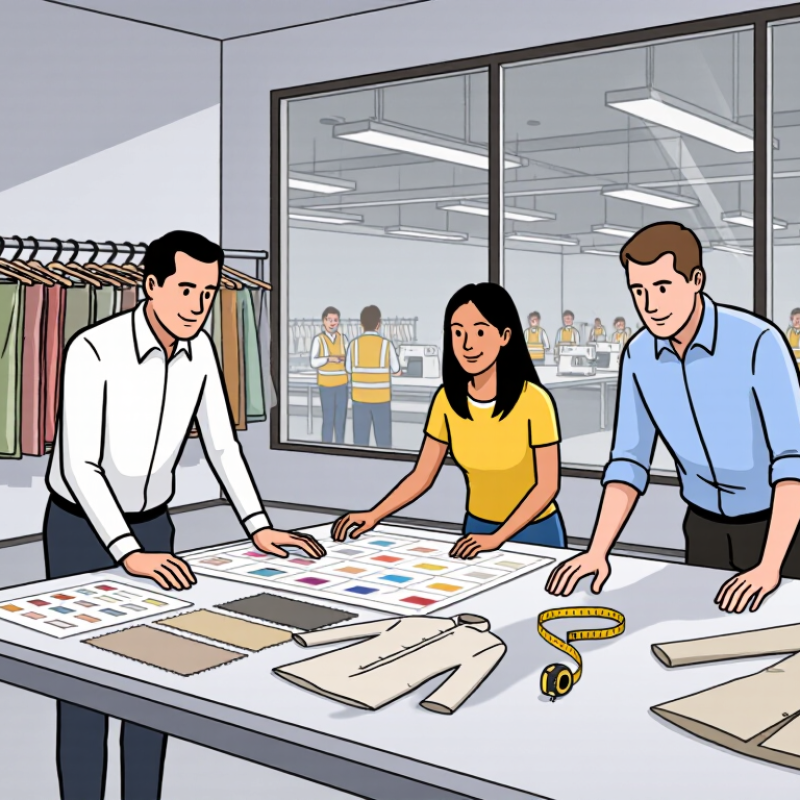
2026 Best Apparel Manufacturers How to Choose the Right One?

Define Product, Volume, and Budget Against 2025 Global Apparel Market Data

Choosing an apparel manufacturer in 2026 starts with three measurable facts: product type, order volume, and budget. These must be compared with 2025 global apparel market conditions.

Industry forecasts commonly placed the 2025 apparel market near 1.8 to 2.0 trillion US dollars, depending on product categories and regional definitions. Demand remained strongest for practical, value-focused clothing, while buyers faced higher labor, freight, and compliance costs. Treat this data as a planning range, not a promise.

Define the product in physical terms. A lightweight cotton shirt needs different machinery from a lined jacket or compression garment. Prepare fabric composition, size charts, stitching details, color standards, and packaging requirements. A factory may claim broad capability, but sample quality reveals more. Check seam strength after washing. Inspect shrinkage, pilling, and measurement tolerance.

Volume changes the manufacturer shortlist. Small runs may suit a flexible workshop, while repeated orders need stable production lines and documented quality controls. Ask for minimum order quantities, sample charges, lead times, defect thresholds, and payment stages. For example, a 500-piece order may carry higher unit costs than a 5,000-piece order, but the larger commitment can create excess inventory.

Set a landed-cost budget, not only a factory price. Include fabric, trims, testing, transport, duties, inspection, and rework. Leave a realistic contingency, perhaps 8 to 15 percent. My own planning mistake was treating the first quotation as final. It ignored packaging changes and delayed freight. Recheck every assumption. Numbers can look precise and still be wrong.

Compare MOQ, Capacity, Lead Times, and 2023 Clothing Export Statistics

Choosing among the 2026 best apparel manufacturers requires more than checking a low quotation. Compare minimum order quantity, production capacity, lead times, and 2023 clothing export statistics together. A factory accepting 100 pieces may suit a test collection, while another requiring 2,000 pieces may offer steadier pricing. Ask for monthly capacity by product type, not one impressive annual number. Production lines handle shirts, outerwear, and knitwear differently.

Lead times should include fabric booking, sampling, production, inspection, and shipping preparation. In my experience, unclear fabric availability causes more delays than sewing itself. Request a written timeline with approval points. Use 2023 clothing export statistics as a market reference. Export volume can show manufacturing strength, but it does not prove consistent quality or suitable communication. Check whether the data covers your exact garment category and destination market. Statistics can be useful, but they can also hide seasonal fluctuations.

Tips: Ask for recent production records, sample measurements, defect rates, and realistic capacity during peak months. Compare three written quotations using identical specifications. Leave space for inspection and correction; I once underestimated this buffer, and the launch schedule became uncomfortable. Do not choose the fastest promise automatically. A short lead time without material confirmation is only a hopeful estimate. Also review payment stages, packaging details, and the factory’s response speed. Small delays in replies often become larger delays on the production floor.

Audit Quality Using ISO 9001 and AQL 2.5 Inspection Benchmarks

Choosing an apparel manufacturer in 2026 requires evidence beyond attractive samples. ISO’s latest Survey of Management System Standard Certifications records more than 1.2 million ISO 9001 certificates worldwide. However, certification confirms a quality management system, not flawless garments. I review the certificate scope, renewal date, corrective-action records, and production controls. A valid certificate can still hide weak sewing supervision.

AQL 2.5 provides a practical inspection benchmark under ANSI/ASQ Z1.4 sampling procedures. It does not mean every order may contain exactly 2.5% defective pieces. The acceptance level depends on lot size, inspection level, and sample quantity. Inspectors should define critical, major, and minor defects before production starts. For example, an open seam is usually major, while a small loose thread may be minor. Photos, measurements, and sealed samples make decisions more consistent.

Check the factory floor.

I also compare inspection findings with ISO 9001 records. Repeated collar distortion, shade variation, or incorrect labels should trigger root-cause analysis, not quick rework. The ISO Survey offers useful global context, but it cannot replace hands-on verification. My own audit notes are rarely perfect; lighting, sampling limits, and rushed visits can affect judgment. That weakness deserves attention. Buyers should request independent final inspections, retain test reports, and review defect trends across several shipments before approving long-term production.

2026 Best Apparel Manufacturers: How to Choose the Right One?

Audit quality using ISO 9001 controls and AQL 2.5 inspection benchmarks

The chart shows the recommended sample size for apparel lots under General Inspection Level II in ISO 2859-1 / ANSI/ASQ Z1.4. The AQL 2.5 acceptance limit is applied through the standard’s acceptance-number tables; it is not a guaranteed defect rate or a substitute for an ISO 9001 audit.

Evaluate Materials Against Textile Exchange’s 124-Million-Tonne 2023 Baseline

Choosing an apparel manufacturer requires more than checking price, capacity, and delivery dates. Material decisions deserve equal attention. Textile Exchange reported 124 million tonnes of global fiber production in 2023. This figure shows the scale of the industry’s resource challenge.

Ask manufacturers for exact fiber percentages, fabric weights, recycled content, and processing locations. A material claim should match purchase records and chain-of-custody documents. Certificates help, but they do not replace practical verification. Request test reports for colorfastness, shrinkage, durability, and harmful chemical controls. Then compare results across several production batches.

During supplier reviews, I examine fabric swatches beside production records. Small differences often reveal larger weaknesses. A “recycled” label may hide unclear input sources or inconsistent percentages. Check whether cutting waste is measured, separated, and reused. Ask how dyeing facilities track water, energy, and chemical use. These details connect one factory’s choices to the 124-million-tonne 2023 baseline.

The baseline is a reference, not a complete sustainability score. Fiber volume alone cannot show working conditions, product life, or real waste reduction. I have sometimes trusted polished documentation too quickly. That mistake is worth remembering. Choose manufacturers willing to disclose limitations, correct data, and improve material decisions over time.

Verify Labor Compliance Across the Garment Sector’s 60 Million Workers

2026 Best Apparel Manufacturers: How to Choose the Right One?

Choosing an apparel manufacturer requires more than comparing prices and sample quality. Labor compliance must be verified across a sector employing about 60 million workers worldwide. That number represents real people, not a marketing statistic. A polished audit report can hide serious gaps. Look closer. Ask for recent wage records, working-hour logs, safety training evidence, and worker grievance procedures. Factory visits should include production floors, dormitories, kitchens, and emergency exits. Workers should be interviewed privately, without supervisors nearby.

During a factory visit, I check whether time records match payroll records. I also compare production targets with legal working-hour limits. Interview workers separately. Their answers often reveal pressure that documents miss. Do not accept copied certificates as complete evidence. Confirm issuing organizations, inspection dates, and corrective-action records. Small inconsistencies deserve attention. They may show weak controls, or simple administrative mistakes. Either way, they require follow-up.

Reliable manufacturers can explain how subcontractors are monitored. Request a current supplier map and proof of labor assessments beyond the main facility. Trace one order from fabric receiving to final packing. Review who approved overtime and how complaints were handled. Digital records help, but they are not automatically trustworthy. I have seen well-organized files fail to reflect daily conditions. That is an uncomfortable limitation. Choose a partner willing to disclose weaknesses, set correction deadlines, and share measurable progress.

FAQS

What should I compare when choosing an apparel manufacturer?

Compare minimum order quantity, monthly capacity, lead time, quality records, and export performance. A small order may suit a test collection. A larger factory may offer steadier pricing.

Why is monthly capacity more useful than annual capacity?

Monthly capacity shows how production changes by product type and season. Shirts, outerwear, and knitwear use different production lines. Peak-month capacity matters.

What should a realistic lead-time schedule include?

It should cover fabric booking, sampling, approvals, production, inspection, and shipping preparation. Request written dates for every stage. Leave room for corrections.

Can export statistics prove that a manufacturer is reliable?

No. Export volume may suggest experience, but it cannot prove consistent quality or communication. Check the garment category and destination market. Statistics can hide seasonal changes.

What evidence should I request before placing an order?

Ask for recent production records, sample measurements, defect rates, and peak-month capacity. Compare three quotations with identical specifications. Small details matter.

How can I verify a fabric’s composition and recycled content?

Request fiber percentages, fabric weight, processing locations, purchase records, and chain-of-custody documents. A recycled claim needs traceable evidence. Do not rely on labels alone.

What fabric tests should manufacturers provide?

Request test results for colorfastness, shrinkage, durability, and chemical controls. Compare results from multiple production batches. One sample is not enough.

How does the 2023 fiber-production baseline help material decisions?

Global fiber production reached 124 million tonnes in 2023. This figure shows the industry’s resource scale, not a complete sustainability score. Use it as context.

What questions reveal a factory’s waste and processing practices?

Ask whether cutting waste is measured, separated, and reused. Also ask about water, energy, and chemical tracking during dyeing. Look for specific records.

What common mistake can delay a clothing launch?

Trusting the fastest promise without confirming material availability can create delays. I once underestimated the inspection buffer. The launch schedule became uncomfortable.

Conclusion

Choosing the best manufacturing partner in 2026 starts with clearly defining your product specifications, expected order volume, target budget, and delivery requirements in relation to global apparel market conditions. To understand how to choose the right apparel manufacturer, compare each supplier’s minimum order quantity, production capacity, lead times, and relevant 2023 clothing export performance. A transparent manufacturer should provide realistic timelines, consistent communication, and evidence of experience with products similar to yours.

Quality, sustainability, and ethical operations are equally important. Review quality systems aligned with ISO 9001 and request inspection procedures based on an AQL 2.5 benchmark. Evaluate fabric sourcing, recycled content, traceability, and material efficiency against the Textile Exchange 2023 baseline of 124 million tonnes. Finally, verify fair labor practices across a garment sector employing approximately 60 million workers by checking workplace policies, documentation, and independent audit records. A structured comparison of cost, capability, quality, materials, and labor standards will help you select a reliable long-term partner.

Amelia

Amelia

Amelia is a seasoned marketing professional with a wealth of expertise in our company’s core offerings. With an unwavering passion for driving growth and innovation, she plays a pivotal role in shaping our marketing strategies and enhancing brand visibility. A key aspect of her responsibilities......